Natural Gas Microgrids for Uninterrupted Operations
Get on-site power generation solutions and seamless grid independence. Stewart & Stevenson’s scalable natural gas microgrid systems are engineered for 24/7 reliability, making them an ideal fit for AI data centers, industrial facilities, and critical infrastructure.
Complete Gas Microgrid Support
From concept through to long-term support, Stewart & Stevenson designs and delivers comprehensive microgrid power solutions that are robust enough to meet the needs of demanding industries.

Feasibility & Engineering
- Load analysis
- System design
- Economic modeling
- Regulatory navigation
- Utility coordination
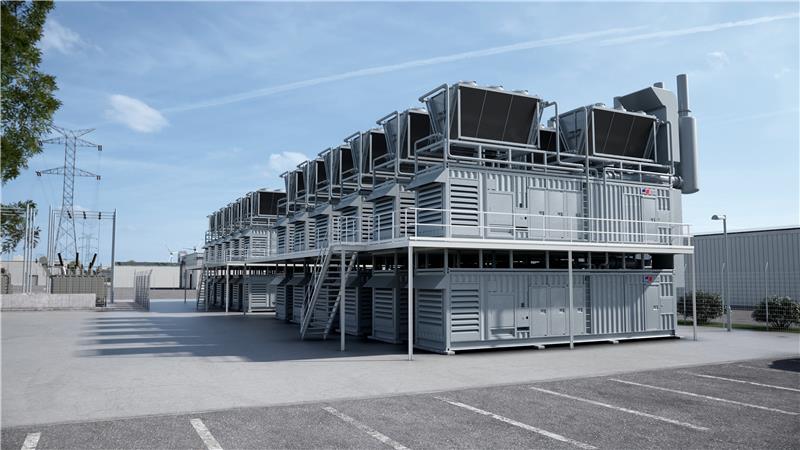
Procurement & Installation
- OEM equipment sourcing (mtu, Volvo Penta, DEUTZ)
- Factory testing
- On-site deployment
- Commissioning

Integration & Controls
- Energy storage
- Renewable integration
- CHP/CHPC systems
- Smart microgrid controllers

Operations & Maintenance
- Remote diagnostics
- Preventive maintenance
- Emergency repair
- Performance optimization
Our Proven Development Process
Our deployment process for natural gas microgrid solutions is a streamlined, six-phase approach—spanning from initial consultation to long-term operational support—refined over decades.

Consultation & Assessment
We begin by understanding your power requirements, site conditions, duty cycle, and operational goals. Our engineers evaluate load profiles, fuel availability, and compliance needs.

System Design & Engineering
We develop a tailored solution that accounts for generator sizing, fuel type selection, switchgear configuration, and integration with existing infrastructure, and we deliver load calculations and single-line diagrams.

Proposal & Approval
You’ll receive a detailed proposal with equipment specifications, pricing, timeline, and project scope. We’ll walk you through the technical drawings and finalize the design before fabrication begins.

Fabrication & Factory Testing
We build and integrate your custom system with OEM components, controls, and balance-of-plant equipment. Then we conduct factory acceptance testing (FAT) to validate performance.

Install, Commissioning & Training
Welcome our certified technicians for on-site installation, startup, and load testing. We’ll commission the system to full operational status and train your staff on operation and maintenance.

Ongoing Support & Maintenance
Our team provides preventive maintenance programs, 24/7 emergency service, parts support, and remote monitoring to ensure long-term reliability and performance.
What Is a Natural Gas Microgrid?
A natural gas microgrid is a localized energy system that generates, stores, and distributes power independently or in parallel with the utility grid. Powered by natural gas generators, these systems provide continuous, reliable electricity for facilities that require uninterrupted operations. This can include anything from AI data centers to manufacturing plants, hospitals, and remote industrial sites.
Unlike traditional grids that rely on centralized power plants and long-distance transmission, natural gas microgrids produce power on-site, reducing transmission losses, improving efficiency, and enabling rapid response to outages or grid instability.
| Specification | Details |
|---|---|
| Capacity Range | 100 kW to 100+ MW (modular, scalable) |
| Fuel Options | Pipeline natural gas, CNG, LNG, propane, biogas, RNG, wellhead gas |
| Efficiency | 35-45% electrical; 80%+ with CHP/CHPC |
| Emissions | 50% less CO₂, 90% less NOx vs. diesel |
| Operating Modes | Grid-parallel, islanded, peak shaving, demand response, black start |
| Integration | Energy storage (Li-ion, flow batteries), solar/wind, CHP, smart controls |
| Power Quality | Active harmonic filtering, voltage regulation, frequency control |
| Deployment Time | 12–18 months (typical) |
| OEM Partners | mtu, DEUTZ, Volvo Penta, and leading controls/storage manufacturers |
Natural Gas Microgrid Applications Across Industries
Stewart & Stevenson designs and deploys natural gas microgrids for facilities that demand uninterrupted power, energy independence, and operational resilience.
AI Data Centers
AI computing pushes power demand to extremes, with dense racks (30–100 kW per rack) running nonstop and leaving no room for outages or fluctuations.
Natural gas microgrids provide:
- 24/7 prime power to bypass grid interconnection delays (~3–7 yrs)
- Scalable capacity that grows with compute demands
- Grid support services (peak shaving, demand response)
- Lower emissions than diesel for ESG compliance
- Rapid deployment (~15 months vs. years for grid upgrades)
Healthcare & Hospitals
Hospitals depend on continuous power to support patient care and run medical equipment, and interruptions are not an option.
Natural gas microgrids provide:
- Instant backup power with seamless islanding
- Lower emissions than diesel for urban compliance
- CHP for heating/cooling (reduce HVAC costs 30–50%)
- Regulatory compliance (Joint Commission, NFPA 110)
Manufacturing & Industrial Facilities
From chemical processing to automotive production, industrial operations rely on steady power to keep tightly coordinated processes running and avoid costly shutdowns.
Natural gas microgrids provide:
- Prime power for grid-constrained sites
- Peak shaving (reduce demand charges 20–40%)
- Process steam/heat via CHP integration
- Power consistency for sensitive equipment
Oil & Gas
Remote wellsites, production facilities, and offshore platforms need dependable power in locations where grid access is limited or unavailable.
Natural gas microgrids provide:
- On-site fuel supply (wellhead gas, reducing logistics)
- Continuous operation in harsh environments
- Emissions compliance (lower NOx/particulates vs. diesel)
- Scalable capacity for drilling, fracking, production
Commercial, Retail & Campuses
Universities, corporate campuses, and mixed use developments use microgrids to maintain day-to-day operations, support growth, and keep facilities running during grid disruptions.
Natural gas microgrids provide:
- Energy cost reduction (demand response, time-of-use optimization)
- Greater resilience for critical buildings during outages
- Alignment with sustainability goals
- Ability to attract tenants with reliable and stable power
Military, Government & Critical Infrastructure
Defense installations, emergency operations centers, and municipal facilities require secure, available power to support readiness and public services.
Natural gas microgrids provide:
- Energy independence (operate off-grid indefinitely)
- Cybersecurity (isolated from grid vulnerabilities)
- Rapid deployment (mobile/containerized options)
Delivering Superior Performance & Reliability
Natural gas microgrids are self-contained power systems that combine on-site generation, storage, controls, and distribution. They can run alongside the utility grid during normal conditions, then function independently (island mode) during grid outages, automatically switching between modes based on power quality, cost, or availability.
Microgrid vs. Traditional Grid Comparison
| Feature | Traditional Grid | Natural Gas Microgrid |
|---|---|---|
| Reliability | Vulnerable to widespread outages | 99.999% uptime; seamless islanding |
| Deployment Time | 3–7 years (interconnection) | 12–18 months (on-site) |
| Power Quality | Subject to grid harmonics/sags | Clean, conditioned power |
| Energy Costs | Fixed utility rates + demand charges | 25–50% savings via peak shaving |
| Emissions Control | Grid mix (varies by region) | 50% less CO₂; RNG compatible |
| Scalability | Limited by utility capacity | Modular; scales 100 kW to 100+ MW |
FAQs
What is a natural gas microgrid and how does it work?
A natural gas microgrid is a localized energy system with on-site generation, storage, and controls, and it can operate both independently or with the grid. It uses natural gas generators to produce electricity, with energy storage and smart controls managing supply and demand.
How long does microgrid deployment take?
Typical deployment for microgrid power is 12–18 months from design through commissioning, compared to 3–7 years for utility grid interconnection. The timeline depends on project size, permitting requirements, and equipment lead times.
What’s the typical ROI and payback period?
Most facilities achieve a 3–7 year payback through energy cost savings, demand charge reduction, and incentive programs. ROI varies based on utility rates, operating profile, and available incentives.
Can microgrids use renewable natural gas (RNG)?
Yes. Stewart & Stevenson microgrid power systems support pipeline natural gas, biogas, landfill gas, and renewable natural gas (RNG) for carbon-neutral or carbon-negative operations. This kind of fuel flexibility enhances resilience and sustainability.
Ready to Power Your Facility with a Custom Natural Gas Microgrid?
Contact Stewart & Stevenson today to discuss power generation solutions that meet your needs. Our microgrid experts will design a system that delivers reliability, cost savings, and energy independence for your most critical operations.